Upcoming dates not published yetAdventure CampsArt CampsSport Camps

Camp Drawa in Stare Drawsko, Pomerania

Stare Drawsko, PolandCampy CHRIS

Notify me when new dates are published

We'll let you know when this camp adds new dates.

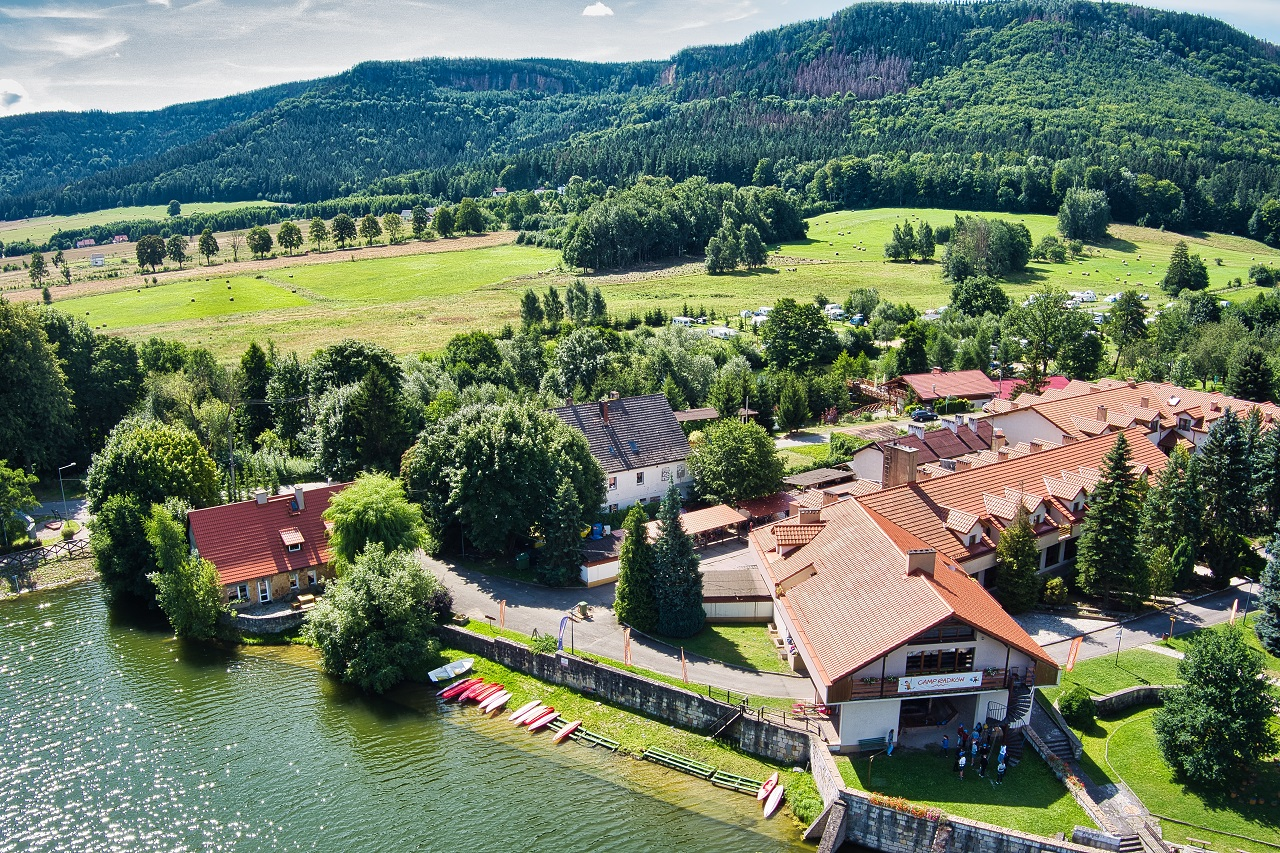
Camp Drawa is one of the eight camp centres owned by the Polish organiser Campy CHRIS. It lies in the Drawsko Lake District in the heart of the Drawa Landscape Park in West Pomerania: forest closes the grounds in on three sides, and on the south they reach Lake Żerdno, which the organiser notes is under a quiet zone. The centre covers three hectares, is fenced and guarded, and only participants and staff are on site - group leaders, instructors, a camp manager, medical cover around the clock, a water lifeguard, technical staff and a night watchman. The main building holds the rooms of the younger camps, the canteen, a shop and the studios for games, art, nature and cooking, together with a fitness room and a table tennis room; the older camps sleep in cabins looking out on the lake. The centre opened in 2017 and takes children from ten years old, with a leader-in-training programme for teenagers up to eighteen. Camp life is built on activities the participant chooses - about forty of them, sporting, artistic and nature-based - and the organiser names two things as particular to this centre: a running programme it says exists nowhere else of its own, and the Guild of Games camp for players of wargames, role-playing, card and board games, which closes with a LARP.

Program type

Adventure Camps, Art Camps

Accommodation

Campus

About

About the Course

Programmes at Camp Drawa are organised by age and by theme, and each one is booked as a whole session. The age-group camps are Łotrzyki (10-12), Paladyni (13-15) and Magowie (15-17). Alongside them run themed camps: the Guild of Games (12-17), the Piława Expedition (13-17), Cooking (12-15), Angling (12-15), Sailing (14-17) and Młoda Kadra - leader in training (16-18). The base of camp life is a choose-your-own format: the organiser counts about forty activities on offer, sporting, artistic and nature-based, and each participant builds their own day from them. The organiser does not publish a language of instruction or a number of lessons for these programmes, and none has been assumed here.

What’s Included

A session covers accommodation at the centre, full board in the camp canteen, the activity programme with its equipment and instructors, the care of group leaders who live with the children, a camp manager, medical cover around the clock and a water lifeguard. Coach travel is organised by the operator and departs from Nadarzyn; a pick-up at a designated place in Łódź, Poznań or Bydgoszcz can be arranged if reported at least two weeks before the session starts. Equipment hire and other paid extras are priced separately by the organiser.

Accommodation

Participants sleep either in the main building, in studios of one and two rooms for six to eight children with their own bathroom, or in cabins for six children with their own bathroom and a view of the lake. Both rooms and cabins have single and bunk beds. Participants of the Piława Expedition sleep in four-person tents and spend most of the session away from the centre. Rooms are allocated by the camp manager, who takes gender and age into account.

Meal Plan

The camp canteen serves three meals a day as a buffet: breakfast, lunch with a dessert and dinner, with a wide choice of healthy dishes. Vegetarian meals are prepared on request. Once in each session the canteen puts on what the organiser calls the Drawa country corner, with its own fresh bread, roast meat, pâtés, dripping with crackling and pickled cucumbers. After the evening activities there is a late snack the organiser calls podkarmiaczka, and points on the grounds keep water available during the day and warm tea when it is cold.

Activities & Excursions

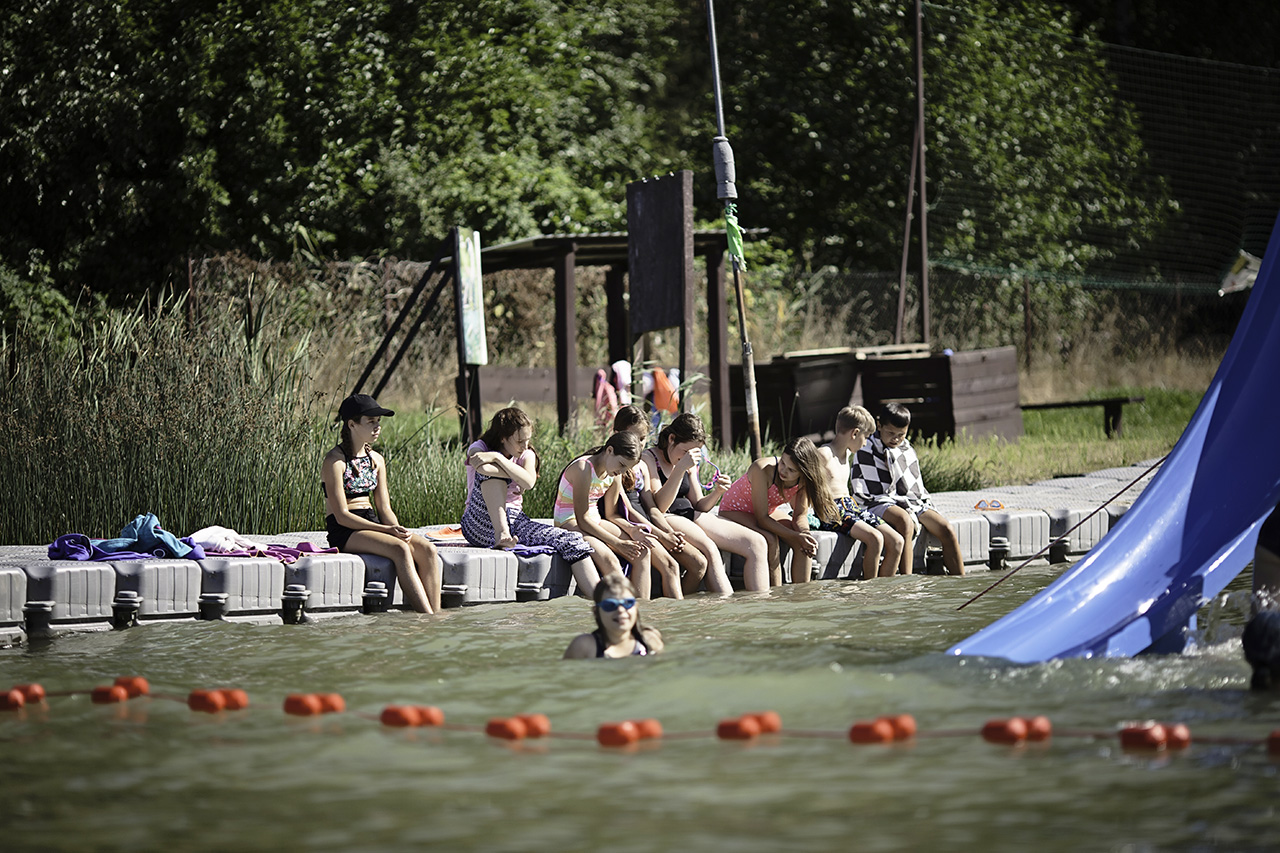
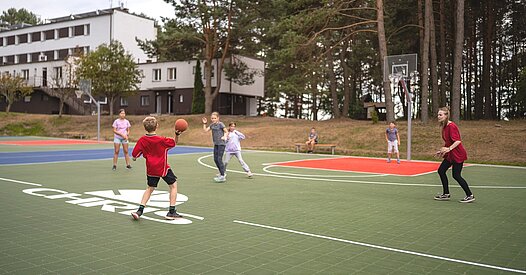
The water base is the largest part of the centre: a sailing port with Topaz and 420 dinghies, a windsurfing port, a kayak jetty with sport, BB and touring kayaks, a rowing jetty with rowing boats and dragon boats, big SUPs, a guarded bathing area and an angling jetty. On land there is a ropes park, a multi-purpose pitch for football and floorball, a volleyball and basketball court, a beach volleyball court, an archery range, bicycles, a dance hall, a fitness room with a small gym, and studios for the Guild of Games, two cooking studios, a woodwork workshop and a handicraft studio. The organiser also runs a running programme it describes as its own, and the Guild of Games camp closes with a LARP.

Facilities

The grounds hold a sailing port with Topaz and 420 dinghies, a windsurfing port, kayak and rowing jetties, big SUPs, a guarded bathing area and an angling jetty; a multi-purpose pitch for football and floorball, a volleyball and basketball court, a beach volleyball court, an archery range and a ropes park; bicycles; a dance hall, a fitness room with a small gym, the Guild of Games studios, two cooking studios, a woodwork workshop, a handicraft studio, a club common room, a room by the shop, a marquee common room for the Piława Expedition camp, a campfire shelter and a drying room for clothes. The main building also holds the canteen, the shop, the nature and art studios and a table tennis room.

Camp Experience

What the organiser puts first at Camp Drawa is the match between the programme and the country around it - a landscape park, forest on three sides and a lake under a quiet zone - and the freedom to choose what to spend the session on. Running through it is the organiser's own Camp Badges programme: bronze, silver and gold badges earned in a chosen speciality, which take effort and persistence to reach. On a two-week session a participant can earn up to two badges in different specialities, and on an eleven-day session one. Phones and electronics are limited: children use their phones on Wednesdays and Saturdays after lunch, during the siesta, and the devices are kept in the camp safe the rest of the time. Families can reach their child through the camp telephones, and during the season the organiser posts daily photo reports from the camps on its website.

Included items

  • 24/7 supervision
  • Arts & Crafts
  • Basketball
  • Football
  • Hiking
  • Cafeteria
  • Games area
  • Medical Centre
  • Outdoor fields

School

Campy CHRIS logo

Campy CHRIS

Campy CHRIS is a Polish camp organiser based in Piaseczno near Warsaw, trading as «CHRIS» Turystyka i Rekreacja. It has run residential camps for children and teenagers since 2001, when its first camp opened on Lake Serwy. The organiser now has eight camp centres of its own, surrounded by nature and built specifically for running camps rather than rented for the season. Every site is fenced and guarded, with trained group leaders and instructors, a camp manager, medical cover available 24/7, a water lifeguard and technical staff including a night watchman on site. Programmes are grouped by age and by theme, and participants compose their own daily camp timetable from the activity blocks on offer. The organiser also runs its own Camp Badges scheme, in which a child earns a bronze, silver or gold badge in a chosen speciality during the session, and publishes daily photo reports from every camp on its website so parents can follow the session.

Location

Map showing camp locationStare Drawsko 36, 78-550 Czaplinek, Poland, Stare Drawsko

Frequently Asked Questions

The organiser states the journey from Warsaw to Camp Drawa takes about seven hours, with stops at designated parking areas along the way. Departures are from Nadarzyn.

Yes. The organiser offers a pick-up on the route in the areas of Łódź, Poznań and Bydgoszcz, and asks that it be reported to a customer service office member no later than two weeks before the planned departure.

No hot meals are served on the way to the centre, so children bring food from home for the outward journey: two sandwiches, water, a piece of fruit and a sweet bar. The organiser asks parents to leave out fizzy sweet drinks, artificially coloured sweets and crisps. Lunch is served as soon as the group arrives, and the camp canteen prepares the food for the return journey.

Either in the main building, in studios of one and two rooms for six to eight children with their own bathroom, or in cabins for six children with their own bathroom and a view of the lake; both have single and bunk beds. Participants of the Piława Expedition camp sleep in four-person tents and are away from the centre for most of the session. The accommodation list is drawn up by the camp manager, who takes gender and age into account.

Vegetarian meals are prepared on request, and gluten-free and lactose-free diets on the basis of a medical certificate, all at no extra charge. Because of the number of participants the organiser does not offer selective or combined diets. Any dietary information is to be entered on the child's qualification card.

Only at set times. Children use their phones on Wednesdays and Saturdays after lunch, during the siesta, and the devices are kept in the camp safe the rest of the time. Tablets, cameras and internet watches are not to be used at the camp, and the organiser recommends leaving them at home; anything brought is kept and returned on the last day. Families can reach their child through the camp telephones, whose numbers are given before the season starts.
More about this camp

Camp Drawa is one of the eight camp centres owned by Campy CHRIS, a Polish camp organiser working since 2001. The centre opened in 2017 and takes children from ten years old, with a leader-in-training programme for teenagers up to eighteen. Children are split into the age camps Łotrzyki, Paladyni and Magowie, alongside themed camps: the Guild of Games for players of wargames, role-playing, card and board games, which closes with a LARP; the Piława Expedition, which sleeps under canvas away from the centre; and camps in cooking, angling and sailing. The base of camp life is a choose-your-own format, with about forty activities on offer. The water base is the largest part of the centre: a sailing port with Topaz and 420 dinghies, a windsurfing port, kayak and rowing jetties with sport, BB and touring kayaks, rowing boats and dragon boats, big SUPs, a guarded bathing area and an angling jetty. On land there are a ropes park, pitches for football, floorball, volleyball and basketball, a beach volleyball court, an archery range, bicycles, a dance hall, a fitness room and studios for games, art, nature, cooking, woodwork and handicraft. The younger camps sleep in the main building, the older in cabins looking out on the lake; the canteen serves three buffet meals a day and once a session puts on its own country corner of home cooking.