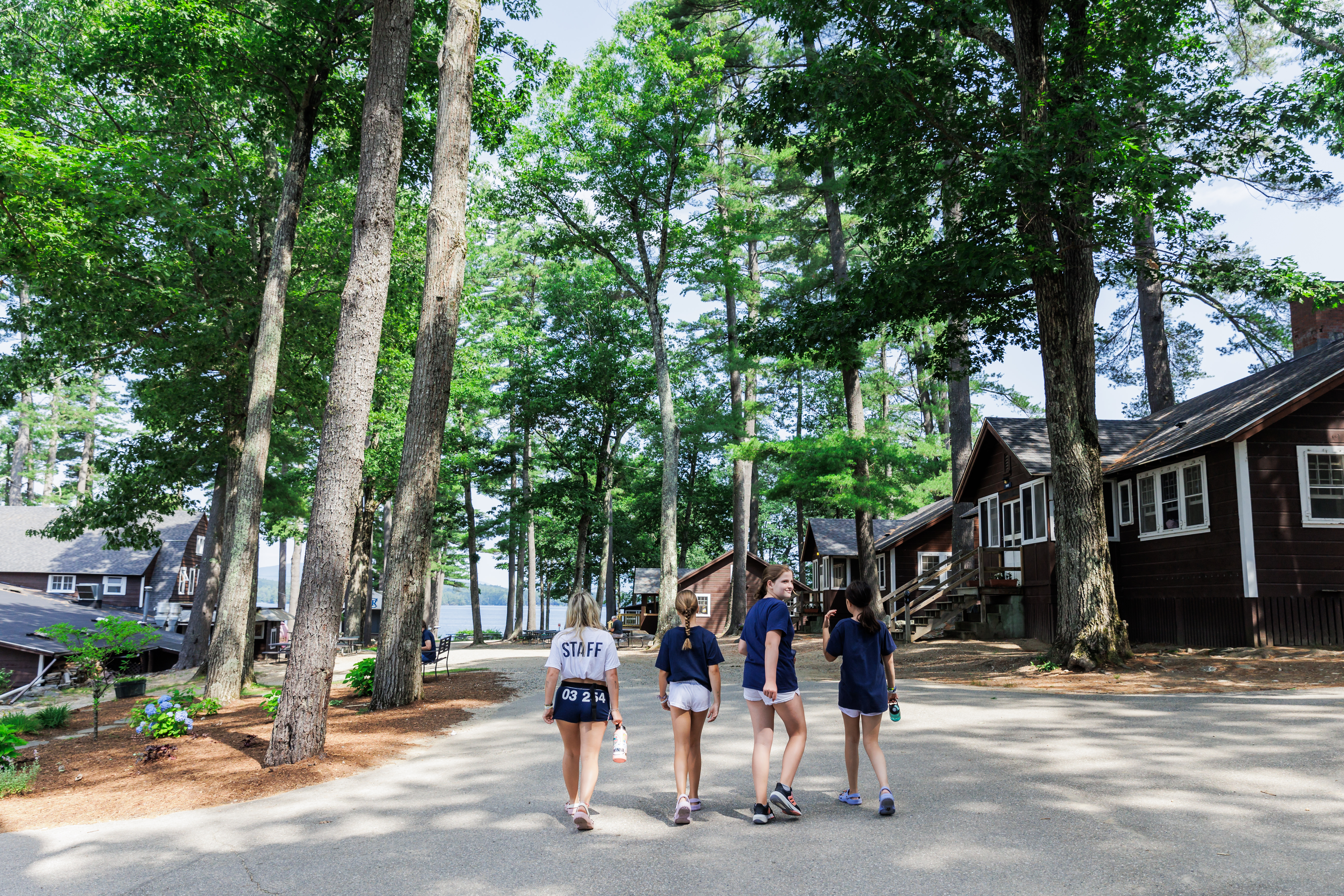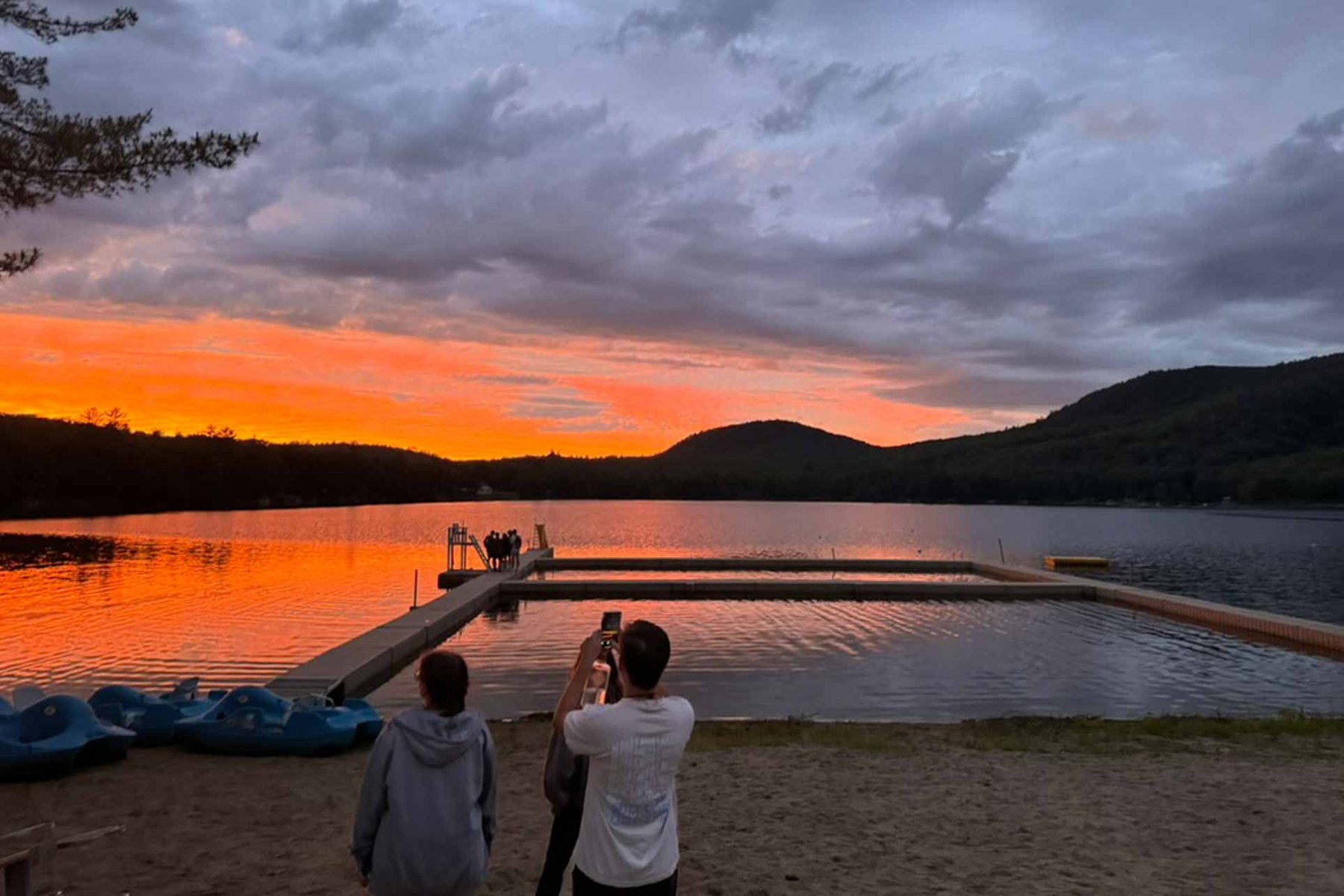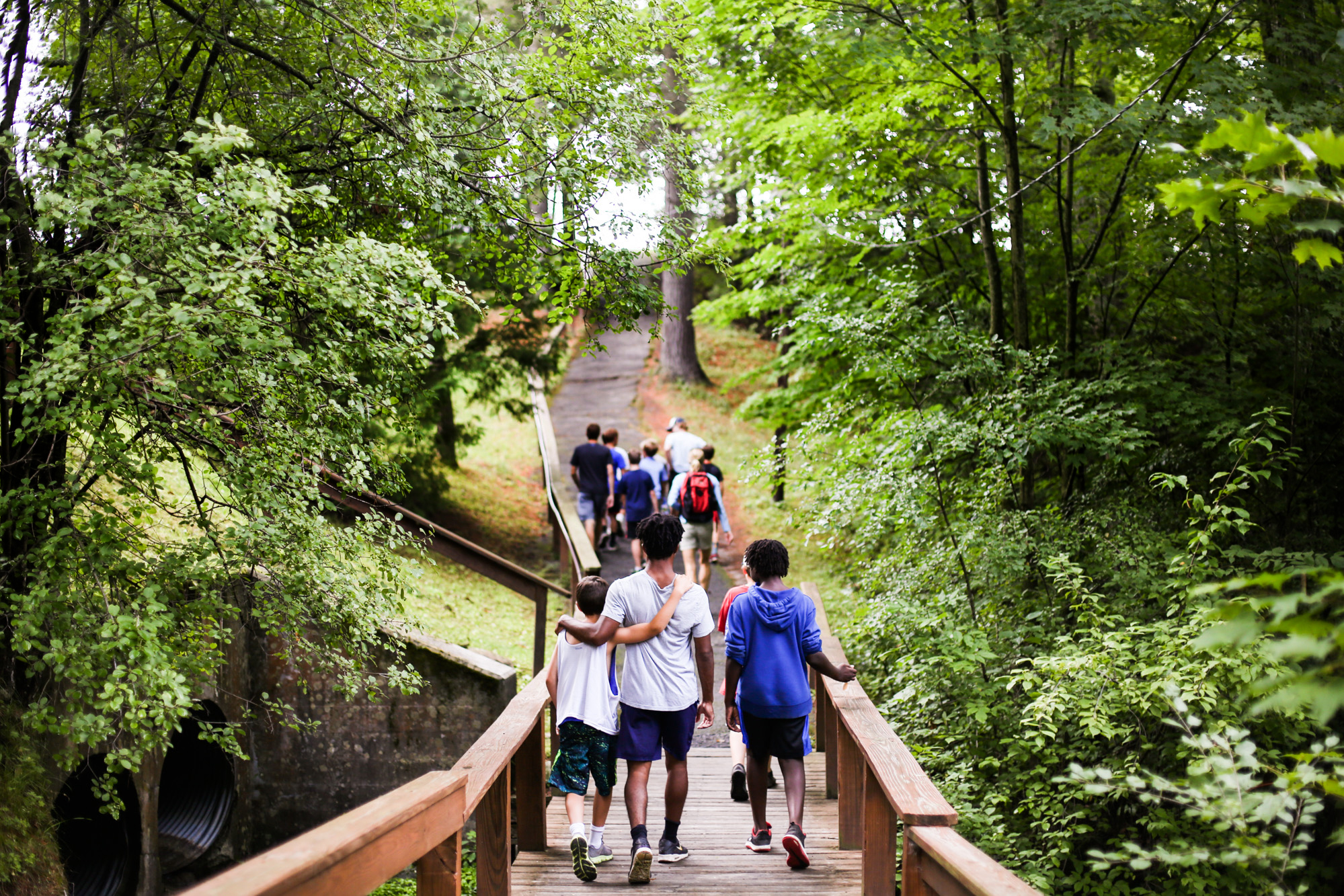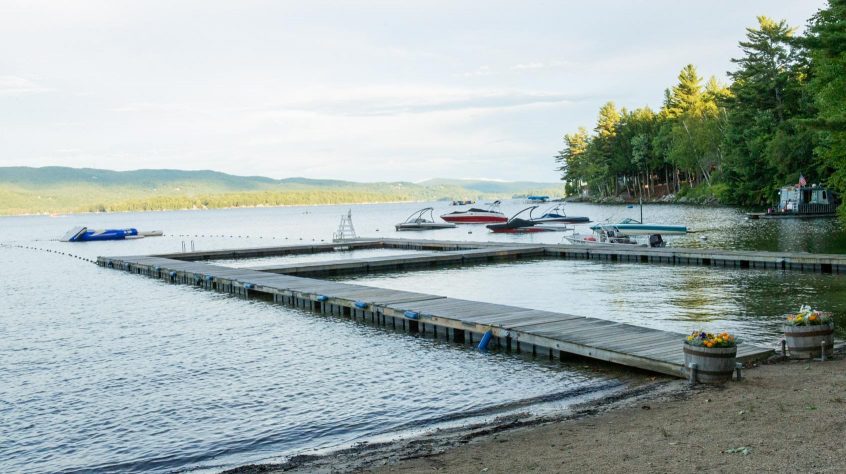
In the Adirondack Mountains in upstate New York, on Lake Balfour, about four hours north of New York City.
One full seven-week season: everyone starts and finishes camp on the same day. A camper trying camp for the first time may come for four weeks minimum, with the option to stay for the whole summer.
Camp days are typically warm and sunny, around 80 degrees or more, which is what makes swimming in Lake Balfour the centre of the day. Evenings and early mornings are cooler and a sweatshirt is useful.
Most come from the Northeastern United States, Montreal and Southern Florida, and the camp has had campers from as far away as Spain and Venezuela.
Staff are university and graduate students and certified teachers, many returning year after year. All waterfront counselors hold Red Cross Lifeguard Training certification and swim instructors hold Water Safety Instructor certification; the tennis programme is run by tennis professionals, and ropes course and climbing tower counselors are certified. There are at least three counselors in each bunk, and every staff member is screened and reference-checked.
On chaperoned luxury coaches that leave from the New York metropolitan area and from Montreal, with boys and girls travelling separately. Campers coming from further away usually fly into Albany airport, about 90 minutes away, and the camp collects them. Bus transport and airport pickup are in the fee; airfare is not.
The fee covers all camp activities and bus transport to and from camp. Separate charges are named by the camp: baggage transportation, senior trips, private lessons, lifeguard training and lice treatment, plus USTA tournaments, USTA membership and golf.
Each camp has its own dining hall. Campers sit with their bunk and meals are served buffet style, with many meals eaten outside and regular barbecues and cookouts.
The camp caters for special diets, peanut-sensitive, gluten-free and lactose intolerant among them. When a camper has a peanut allergy, the campers in that bunk are told in advance and asked not to bring food with peanuts into the bunk.
Staff are trained during pre-camp orientation to help campers settle into camp routines and to watch for signs of homesickness. Each camp also has a Camp “Mom” living on site whose only job is to look after the campers.
Yes. Brothers and sisters get together for a visit every Saturday after lunch at one of the camps, and the venue rotates week by week.
It is not a uniform camp, though campers need camp T-shirts for special occasions, and Che-Na-Wah campers also need navy blue shorts.