Adventure CampsArt CampsSport Camps

Camp Wekeela Sleepaway Camp in Maine

Hartford, United StatesCamp Wekeela4.9(237)

Dates
Jun 24 – Aug 8, 2027
Duration
2–7 weeks
Ages
7–16
Price from

$2,271

Per week on a 7-week stay

Shortest stay: 2 weeks — $5,900

Kids Camp

No immediate payment requiredFree consultationResponse within 24 hours

A family-run, co-ed sleep-away camp on a mountain lake in Hartford, Maine, for boys and girls aged seven to sixteen. Campers live in wooden cabins arranged in villages by gender and age, with their counsellors living in the cabin alongside them, and build individual schedules from a four-day activity rotation. The programme covers water sports and waterskiing on the lake, land sports, tennis, outdoor adventure on a climbing tower and ropes course, environmental education and creative, performing and culinary arts, with trips out of camp in every session. Kids Camp, Teen Camp and a Leadership in Training programme run as separate tracks, each with full-season, half-season and two-week options.

Age

7–16 yrs

Language

English

Program type

Adventure Camps, Art Camps

Accommodation

Cabin

About

About the Course

The camp runs three tracks. Kids Camp covers the younger divisions, Teen Camp takes campers who are in the upper school grades and adds multi-day excursions, and the Leadership in Training programme is for the oldest campers and includes community-service travel. Each track offers a full-season stay, a first or second half-season stay and, for first-time campers, a two-week option with the flexibility to extend. Camper schedules are drawn from the camp's developmental programme areas — land sports, water sports, waterskiing, tennis, outdoor adventure, environmental education and creative, performing and culinary arts — on a four-day A-B-C-D rotation with six activity periods a day, one of which is an elective period where every programme area offers a choice activity. There are no A, B or C teams and no tryouts: the camp's stated position is that anyone who wants to take part is encouraged to do so.

What’s Included

The camp fee covers the stay, all meals, the activity programme and the out-of-camp trip days that fall in the schedule rotation; for the Teen Camp and Leadership in Training tracks it also covers the multi-day and overnight trips, which include hotel accommodation. Travel to and from camp is arranged separately: the camp runs chartered coaches from Rye in New York, from Boston Logan Airport and from the Portland Jetport, and these transfers are charged as options rather than included. Optional add-on programmes — horse riding, ice skating and stick-and-puck hockey, surfing, and photography and graphic-design internships — are also charged separately. Campers are asked to buy camp clothing from the camp store for arrival days and for any time the group leaves the campus.

Accommodation

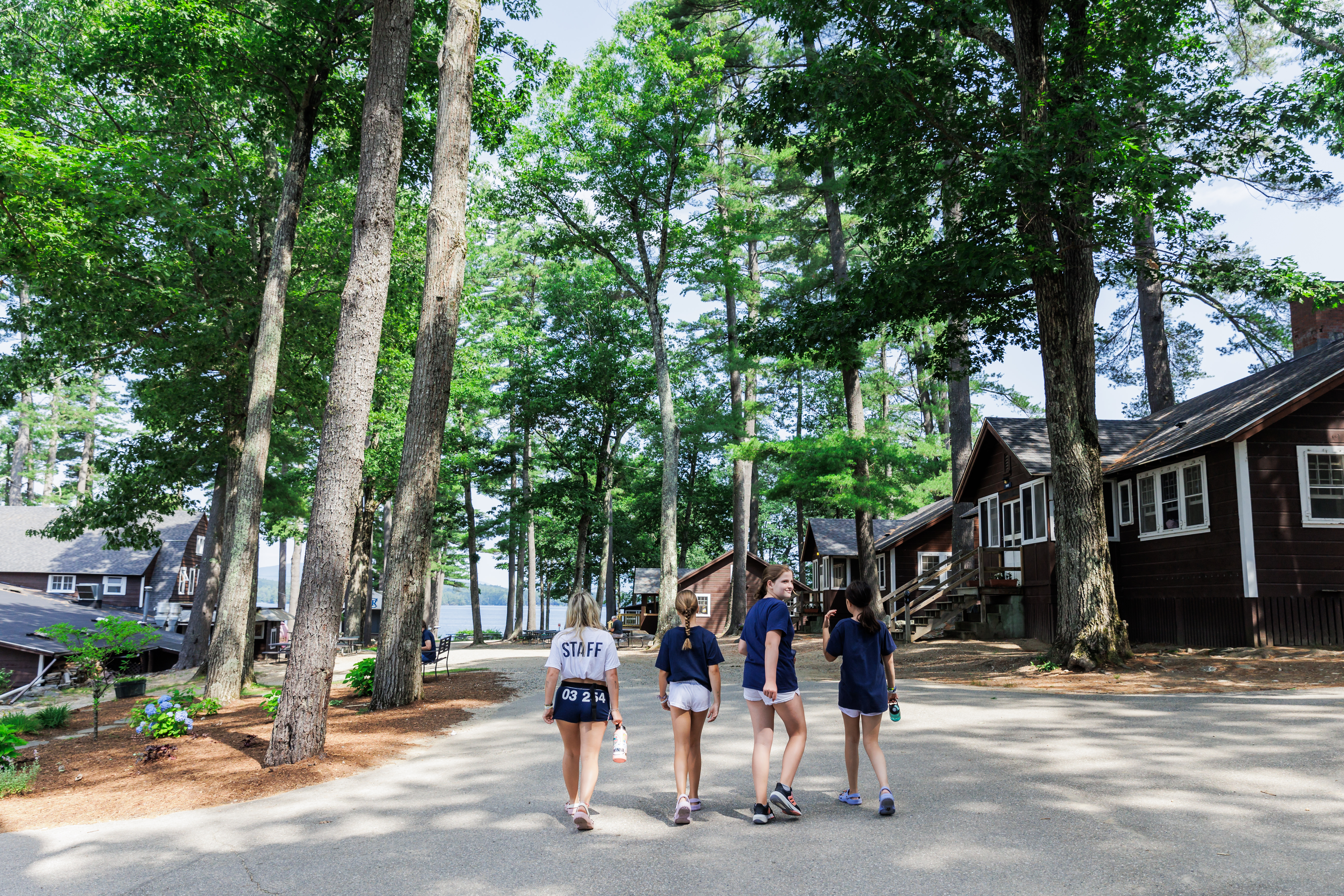
Campers sleep in wooden cabins of sturdy construction, raised on foundations above the ground, weather resistant and fitted with ample screened windows and doors. Every cabin has electricity, sinks, private showers and toilets, pine bunk beds and night lights that stay on through the evening. Cabins are arranged in villages that group campers of the same gender and roughly the same age, which the camp uses to build community and keep group dynamics positive. On average a cabin holds ten to twelve campers with three to four staff members, and counsellors live in the cabin with the campers they supervise.

Meal Plan

Meals are prepared by hand by an experienced team of chefs and served family style: each bunk eats together with its counsellors, with table service and a large salad bar at every meal with choices appropriate to the time of day. Theme meals run through the season. The campus is nut-free — no foods with a peanut base are served and snacks or sweets containing nuts are not allowed — and the camp accommodates all allergies and offers specialty diet meals for campers and staff with dietary restrictions. The directors' own family includes a child with coeliac disease, which the camp names as the reason it rebuilt how it prepares food and what it permits on site.

Activities & Excursions

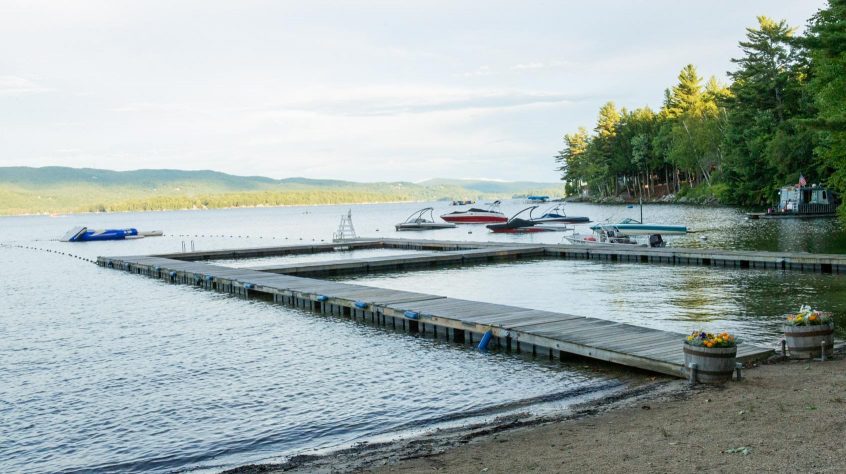
The activity programme runs in eight areas. Water sports cover swimming, sailing, waterskiing, wakeboarding, canoeing, kayaking, windsurfing, tubing, water trampolines and water volleyball on the camp's lakefront. Land sports cover aerobics, archery, baseball, basketball, a batting cage, disc golf, football, fitness and conditioning, gaga-ball, golf, gymnastics, ice skating, ice hockey, lacrosse, street hockey, soccer, ultimate frisbee, volleyball, weight-lifting and yoga. Tennis has its own programme on seven all-weather courts, with pickleball as well. Outdoor adventure includes a twenty-one element high and low ropes zone, a rock wall and climbing tower, backpacking, trailblazing, campfire cooking, orienteering, rappelling, a zip wire, camping and nature study. Creative arts cover ceramics, painting, drawing, tie-dye, pottery wheels, light woodworking, model rocketry, digital photography, jewellery-making, astronomy, stained glass, cartooning and scrapbooking; performing arts cover musicals, theatre, set design, voice, dance, cheerleading, improvisation, video, electric and acoustic guitar, piano and drums; culinary arts cover baking, cooking, technique and theory. Trips include weekly camping trips in northern New England, professionally led day hikes in Maine and the White Mountains, white-water rafting for teens, surf trips to the Atlantic and multi-day teen trips to the Maine coast, Boston, Montreal and beyond. Camp traditions include a College Weekend competition in the first half of the season and a Color War in the second, a weekly campfire with camper and staff performances and an optional lakeside candle service.

Facilities

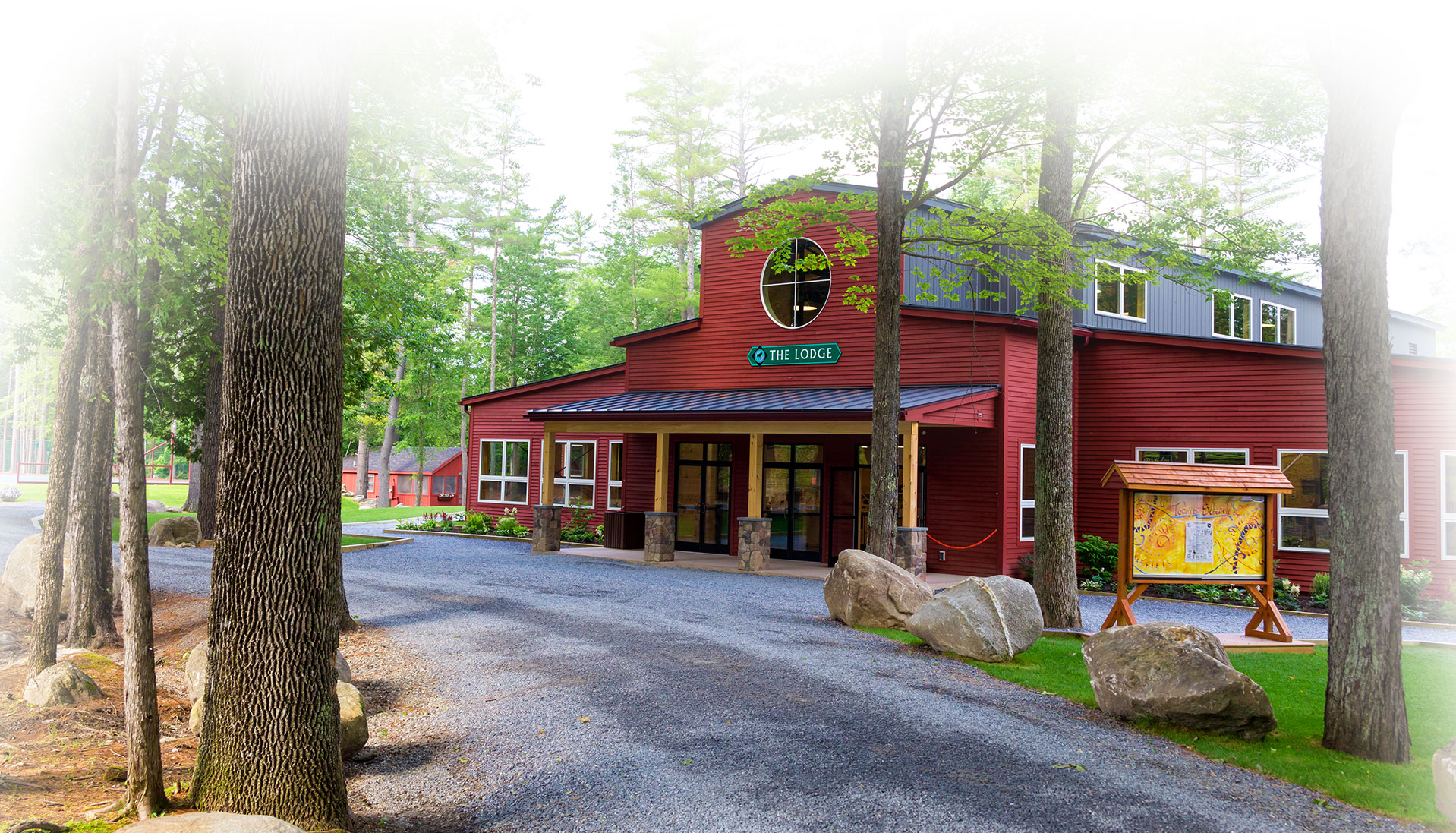
The camp sits on a lakefront site in the Maine hills. Facilities include a creative arts studio, a culinary arts studio, a camper recreation centre, all-weather tennis courts, a twenty-one element high and low ropes course with a rock face and a climbing tower, large playing fields, outdoor and indoor theatres, a dance studio, a gymnastics building and weight room, outdoor basketball courts, a hockey rink, a pottery studio, beach volleyball, a fitness centre, the lakefront with its waterskiing and swimming areas, the dining hall, the camper cabins and a full-service health centre. The site is equipped with a defibrillator, has electronic gates at its entrances and is patrolled late into the night.

Camp Experience

The camp describes itself as family run, co-ed and built on kindness, problem-solving, nurturing and fostering independence — not over-competitive and not pretentious. The owners live on site through the season and all three of their children work at the camp. Campers come from across the United States and from abroad, and the camp reports that more than nine in ten campers return the following summer. New campers spend their first days on bunk bonding activities and getting-to-know-you sessions, and each bunk agrees a theme for the summer. Counsellors are at least first-year college students, junior counsellors are high-school seniors and former campers, staff come from the United States and overseas through agencies that run criminal background checks and in-person interviews, and the camp runs a two-week training period before campers arrive. Devices with internet access are not allowed; music players without WiFi are. Parents get one call for every two weeks of a camper's stay, daily photographs go up in a password-protected part of the camp website, and a daily email service lets parents write to their camper and have the camper's handwritten reply scanned back to them.

Language Camp prices

Leadership in Training

15–16 yrs

Dates

Price from

The oldest campers' track, for campers in the final school year of the camp's range. Alongside the regular activity rotation the programme adds leadership work and community-service travel: the camp names an overnight community-service trip as the highlight of the first half of the season, and a longer volunteering and cultural-immersion trip for its oldest campers.

An activity and leadership programme rather than a taught course, so it carries no weekly lesson count.

Leadership and community-service track for the camp's oldest campers, combining the regular activity programme with volunteering trips and extended travel.

Daily Schedule

  1. Breakfast

    07:00–08:00

  2. Classes

    08:30–12:30

  3. Lunch

    12:30–13:30

  4. Dinner

    18:30–19:30

  5. Evening activities

    20:00–22:00

  6. Lights out

    22:30

Included items

  • 24/7 supervision
  • International students
  • Small groups
  • Arts & Crafts
  • Basketball
  • Drama Workshop
  • Excursions
  • Cafeteria
  • Games area
  • Medical Centre
  • Outdoor fields

Optional Extras

Top recommendation

Recommended for most families

Smooth arrival and fewer surprises.

Coach transfer from Portland Jetport, one way

Chartered air-conditioned coach transfer between the Portland Jetport and camp, one way. Campers flying in are met by camp staff on arrival.

Graphic design internship (Teen Camp)

An internship for teen campers who want to help design the yearbook pages and memory mates with the camp photographer. Charged once per session.

Education1
Other4
Transfer8

Reviews

4.9out of 5

Reviews

Based on 237 Google reviews

Photos

School

Camp Wekeela logo

Camp Wekeela

Camp Wekeela is a family-run, co-ed sleep-away camp on a mountain lake in Hartford, Maine, for boys and girls aged seven to sixteen. It is owned and directed on site by Lori and Ephram Caflun, who have worked at the camp since 1997 and bought it in 2008, and it keeps a camper-to-counsellor ratio of roughly two to one. The programme is built on eight areas — water sports, land sports, tennis, outdoor adventure, environmental education, and creative, performing and culinary arts — with instruction aimed at skill progression rather than competition: the camp runs no A, B or C teams and holds no tryouts. Campers build individual schedules from a four-day activity rotation and live in wooden cabins arranged in villages by gender and age. The camp is nut-free, offers specialty diet meals, and has a full-service health centre with a doctor on call around the clock.

Location

Map showing camp location1750 Bear Pond Road, Hartford, ME 04220, United States, Hartford

Frequently Asked Questions

The camp is co-ed and takes boys and girls aged seven to sixteen. It runs three tracks: Kids Camp for the younger divisions, Teen Camp for the upper school grades, and a Leadership in Training programme for the oldest campers. Each track can be booked for the full season, for the first or second half of the season, or as a two-week option for first-time campers, with the flexibility to extend.

In wooden cabins of sturdy construction, raised on foundations above the ground, weather resistant, with ample screened windows and doors. Every cabin has electricity, sinks, private showers and toilets, pine bunk beds and night lights that stay on through the evening. Cabins are arranged in villages grouping campers of the same gender and roughly the same age. On average a cabin holds ten to twelve campers with three to four staff, and counsellors live in the cabin with the campers they supervise.

Campers build individual schedules from the camp’s daily activity schedule, taking part in both required and elective programmes with their bunk and their division. There are no A, B or C teams and no tryouts: the camp’s stated position is that anyone who wants to try something is encouraged to do so. Campers who want competition can find it through inter-camp tournaments against other camps in Maine and New Hampshire several times a season.

The camp runs a four-day A-B-C-D rotation with six activity periods a day. Campers wake in the morning, raise the flag and go to breakfast as a camp, clean the bunk, then take three activity periods before lunch and two more in the afternoon, separated by a rest hour. The sixth period is the Wekeela hour, an elective in which every programme area offers a choice activity. The day ends with dinner, an evening activity and bunk rituals, with lights out staggered by division.

The ratio is close to two campers to one counsellor. Counsellors are at least first-year college students; junior counsellors are high-school seniors and former campers. Staff come from the United States and from around the world through agencies that run criminal background checks and in-person interviews, and the camp interviews them as well. A two-week training period runs before the campers arrive.

An experienced team of chefs prepares all meals by hand. Meals are family style: each bunk eats together with its counsellors, with table service and a large salad bar at every meal with choices appropriate to the time of day, plus theme meals through the season. The campus is nut-free — no foods with a peanut base are served and snacks or sweets containing nuts are not allowed — and the camp caters for all allergies and offers specialty diet meals for campers and staff with dietary restrictions.

A full-service health centre operates through the season, staffed by nurses, EMTs and student health professionals, with a doctor on call around the clock. The camp is equipped with a defibrillator and has two Maine hospitals nearby.

Most campers fly for the first part of the journey. The camp runs chaperoned chartered coaches from Rye in New York and meets campers arriving at Boston Logan Airport and the Portland Jetport, taking them on to camp by chartered coach, van or camp vehicle. All campers are met by camp staff on arrival, and parents are also welcome to drive their child to camp and see the site. Coach and private transfers are offered as paid options; the camp asks that recommended flights be booked through its own travel agent.

All campers take part in nature excursions such as hiking, canoeing and fishing in Maine, and a trip day falls in each schedule rotation, usually to a festival, an amusement park or another point of interest. Teenagers add longer excursions of three to four days to the Maine coast and Bar Harbor, Boston and the North Shore, the mountains of New Hampshire and Vermont and Montreal, with hotel accommodation, as well as white-water rafting on the Kennebec River and the hike up Mount Washington. The oldest campers take a longer volunteering and cultural-immersion trip.

Devices with internet access are not allowed; music players that do not need WiFi are. Parents get one call for every two weeks of their camper’s stay. Daily photographs are posted in a password-protected part of the camp website, and a daily letter service lets parents email their camper and have the camper’s handwritten reply scanned back to them. There is a visitors’ day in the season when parents share a traditional camp day with their child.

Yes — a College Weekend competition in the first half of the season and a Color War in the second, in both of which campers are split into teams for athletic, creative and deliberately silly events. There is also a weekly campfire with camper and staff performances, an optional lakeside candle service and a shuttle to the local church on Sundays.

The camp is not a uniform camp, but it asks that campers buy camp clothing from its store to wear on arrival days and whenever the group leaves the campus. A packing list with specifics is published on the camp website.
More about this camp

Camp Wekeela sits on a lakefront site in the hills of Hartford, Maine, and takes boys and girls aged seven to sixteen. It is owned and run on site by Lori and Ephram Caflun, who have worked at the camp since the late nineteen-nineties and bought it outright some years later; the camper-to-counsellor ratio is close to two to one. The camp runs three tracks. Kids Camp covers the younger divisions, Teen Camp takes the upper school grades and adds multi-day excursions to the Maine coast, Boston, the White Mountains and Montreal, and the Leadership in Training programme is for the oldest campers and includes community-service travel. Each track can be booked for the full season, for the first or second half, or as a two-week option for first-time campers. Schedules are built by the camper from a four-day A-B-C-D rotation with six activity periods a day, one of them an elective in which every programme area offers a choice. The eight programme areas are water sports, land sports, tennis, outdoor adventure, environmental education and creative, performing and culinary arts. Water sports run on the camp's own lakefront and include waterskiing, wakeboarding, sailing, canoeing, kayaking and windsurfing alongside instructional swimming; outdoor adventure uses a twenty-one element ropes zone, a natural rock face and a climbing tower. The camp runs no A, B or C teams and holds no tryouts. Campers sleep in wooden cabins with electricity, private showers and toilets, arranged in villages by gender and age, holding ten to twelve campers with three to four staff who live in the cabin with them. Meals are family style, prepared by hand, with table service and a salad bar at every meal; the campus is nut-free and the camp caters for all allergies and specialty diets. A full-service health centre is staffed through the season with nurses, EMTs and student health professionals and a doctor on call around the clock, with two Maine hospitals nearby. Devices with internet access are not permitted. Parents receive one call for every two weeks of their camper's stay, daily photographs are posted in a password-protected part of the camp website, and a daily two-way letter service runs through the season. Travel is arranged separately from the camp fee: chartered coaches run from Rye in New York and from Boston Logan Airport and the Portland Jetport, and campers flying in are met by camp staff on arrival. Optional add-on programmes include horse riding, ice skating and stick-and-puck hockey, surfing and photography and graphic-design internships.

Price from $2,271