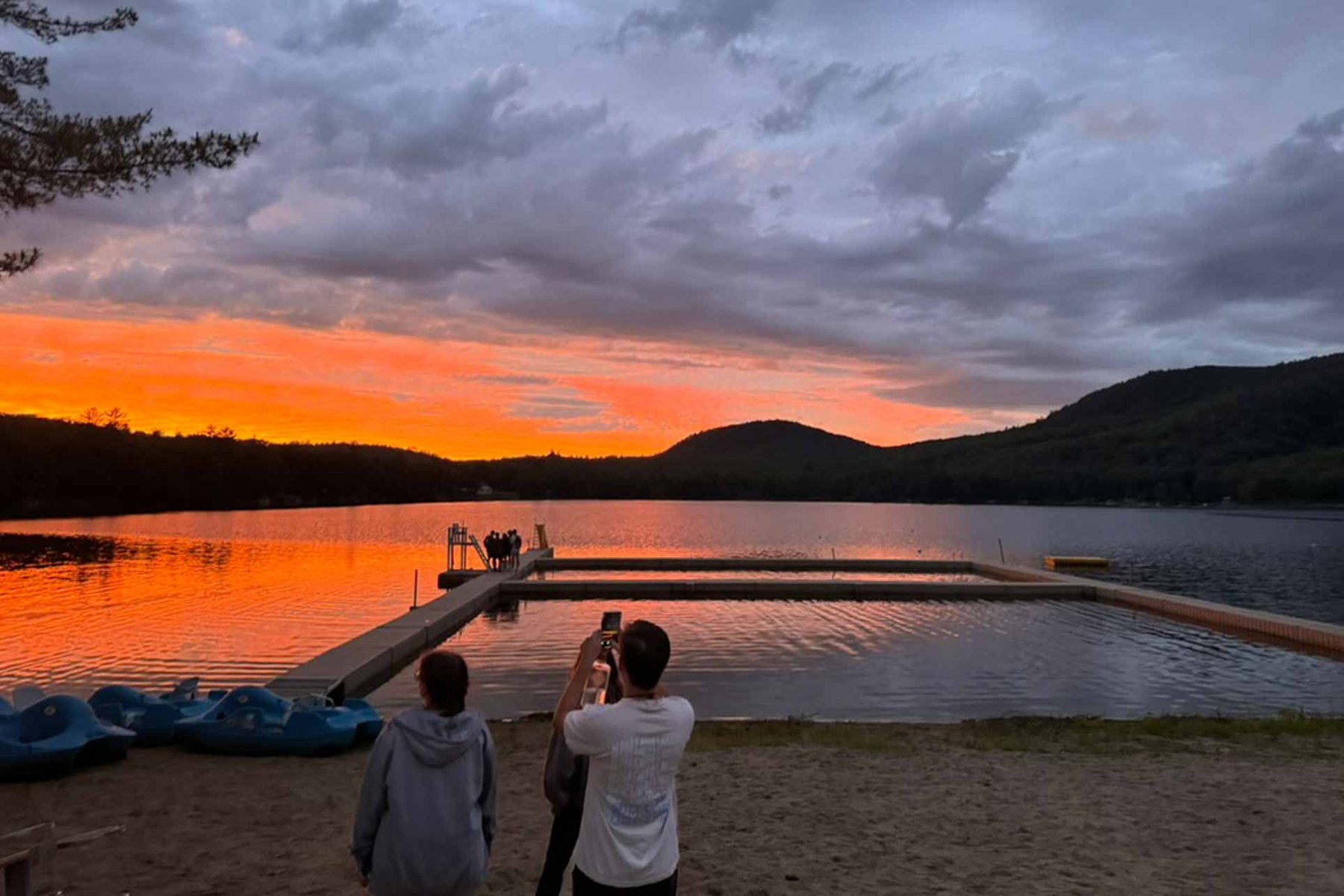
Camp Cobbossee, the brother camp, is located less than half a mile away on the same lake. The two camps get together for one shared all-camp special event, such as Carnival, and arrange a social or community-service event for the oldest campers. Girls with a brother or cousin at Camp Cobbossee see him at least once a week, either at a shared event or at a brother/sister lunch, and travel to and from both camps is coordinated with the same timing and locations.
Campers write letters home two to three times a week. Parents can send one-way emails, which the camp prints and delivers with the rest of the mail; campers cannot send email back. Families of Camp Kippewa campers may schedule one phone call per session once their daughter has been at camp for at least a week. The camp also posts daily photos and newsletters through the summer.
Packages are not allowed. Any package received without prior permission from a director is held until the end of the session and then returned to the parents or donated. Food and gum are not permitted in the cabins and are confiscated.
Mobile phones and electronic games are not permitted at camp. Basic screen-free music players, such as an iPod Shuffle, are allowed in the cabins, and the camp is not responsible for lost, damaged or stolen players; each bunk is also provided with an iPod and speaker so counsellors can add campers song requests. Hair dryers and flat irons are not allowed either.
No uniform is required. Campers are asked to bring a couple of uniform items for certain special events and trips out of camp, but not for daily wear. Everyday clothing should be non-designer and camp-friendly — most girls wear cotton shorts with a t-shirt or tank top. Campers need suitable footwear for each activity and must tie their hair back during activities for safety and hygiene.
Every counsellor has completed at least one year of university, and the average counsellor two or more; staff are recruited from universities in the United States and abroad, many of them training as teachers or social workers. Each candidate goes through an in-depth interview in person or by video call, submits three professional references and must pass a background check. Each programme area is headed by a specialist, and the camp maintains a camper-to-counsellor ratio of better than three to one.
Yes. The oldest campers are fifteen and entering tenth grade; the following summer, entering eleventh grade, they may return as counsellors-in-training, seeing camp from the counsellor side and learning leadership skills. After completing the CIT programme, at seventeen and entering twelfth grade, they can apply to become a junior counsellor, living in a bunk and helping teach activities. Places are limited and the application process is the same as for other staff.
Girls of all ability levels are welcome — enthusiastic beginners, advanced riders and everyone in between. Riding instruction is tailored to each camper’s skill level, and the published grade range varies slightly by session: the third session focuses on younger, newer riders.