Upper School at Phillips Exeter Academy
Exeter, United StatesPhillips Exeter Academy Summer
- Latest published dates
- Jul 6 – Aug 6, 2026
- Duration
- 32 days
- Ages
- 13–18
$2,250
Per week on a 5-week stay
Sold in packages from 5 weeks — $11,250
We'll let you know when this camp adds new dates.
Upper School is the high-school half of Phillips Exeter Academy's summer session in Exeter, New Hampshire. Students who have completed grades 9 through 12 design their own curriculum, choosing three classes from a wide range of disciplines, and study them by the Harkness method — a dozen students and one teacher around an oval table. Boarding students live in Academy dormitories on the 673-acre campus; afternoons go to sport and to an extensive performing arts programme.
Language
English
Program type
Science / STEM Camps
Accommodation
Campus
About
About the Course
The Upper School programme is for students who have completed grades 9, 10, 11 or 12. Students design their own curriculum, choosing three classes from a diverse range of disciplines, including college preparation options. Selection is made by format — a preferred and an alternate course in each of four formats — and the timetable is built from those choices and course availability. As an alternative, two academic clusters are offered, the Charles J. Hamm '55 Leadership Program and The Design of Everyday Things, each grouping three courses that are taken together. All coursework requires participation in group discussion under the Harkness method, so a high level of English is necessary; non-native speakers with fewer than five years of primary instruction in English submit a TOEFL iBT score of 100 or greater.
What’s Included
Tuition for boarding students covers three academic courses, room and board in an Academy dormitory, daily meals and physical education classes from the general offerings. Students who live near Exeter may enrol as day students instead, in which case the fee covers the three academic courses and daily meals while on campus. Private music lessons and the rowing, soccer and volleyball clubs are charged separately and are listed under extras. International students are required to purchase the Academy's student injury and sickness insurance plan.
Accommodation
Boarding students live in Academy dormitories on the campus. Dormitories vary in size — some house thirty to sixty students, others ten to twenty — and each has shared bathrooms. Every dormitory has resident faculty living in it together with affiliate dorm faculty. Students are housed by programme and by gender, and card access is limited to their own dormitory. Dormitories are not air-conditioned and students may not bring air conditioners. Day students are also assigned to a dormitory and are full members of it, but leave campus by dorm check-in time unless the faculty member on duty gives permission.
Meal Plan
Daily meals in the Academy dining hall are included for boarding students. Day students eat on campus while they are there.
Activities & Excursions
Afternoons are given over to sport and to an extensive performing arts programme. Boarding students take an afternoon physical education class; for day students it is optional. Beyond that there are films and games on the quads, dormitory activities and excursions off campus. Students may replace their two sessions of sport with one of the optional athletic clubs — rowing, soccer or volleyball. Classes, sport, assembly and residential life run Monday through Saturday; Sunday is unscheduled, with campus activities and off-campus trips on offer.
Facilities
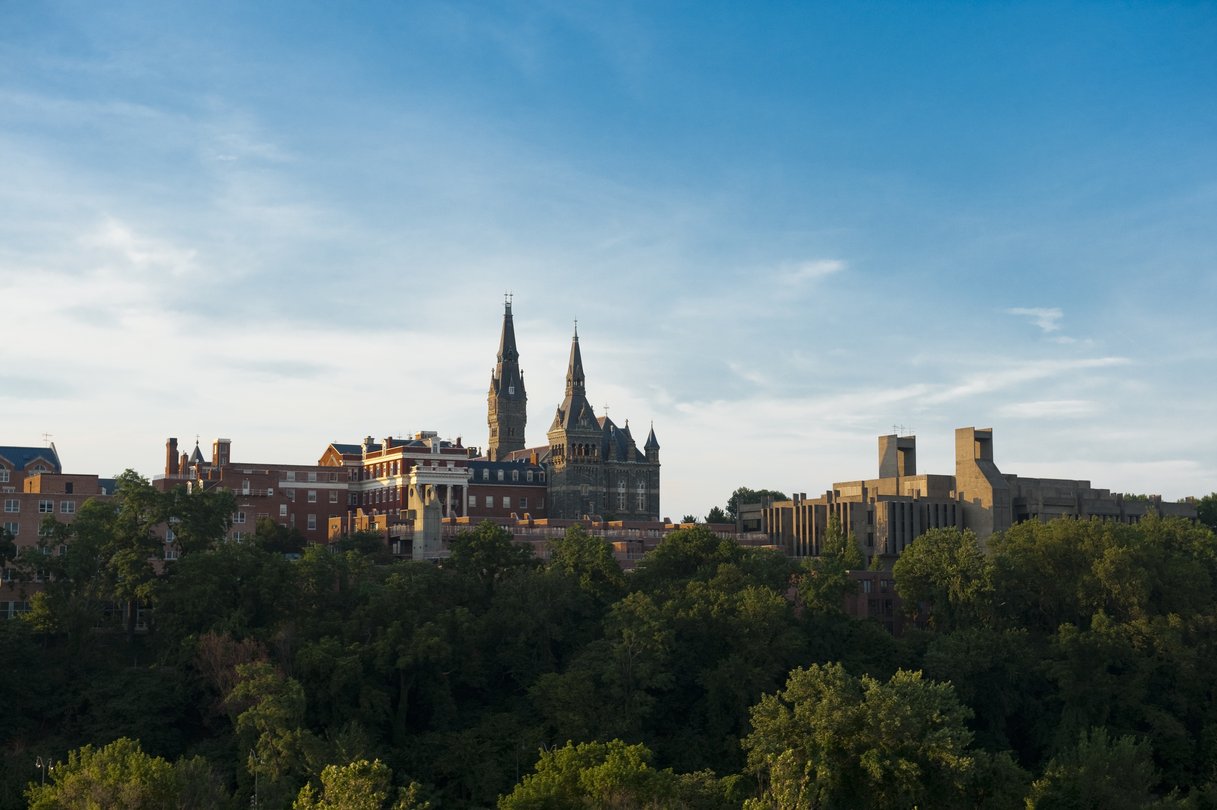
The Academy campus covers 673 acres, surrounded by fields and woodland in a New England town about ten miles from the Atlantic coast and an hour north of Boston. Summer students have full access to the campus and its facilities, including the dining hall, the playing fields, performing arts spaces and practice rooms. Students bring their own laptop, Chromebook or tablet; some courses have their own technology requirements.
Camp Experience
More than six hundred students in grades 7 through 12 attend the summer session, drawn from over forty countries and more than thirty US states. The programme is academic enrichment rather than credit-bearing study: students who complete it receive grades and teachers' comments, but no course credit and no certificate. Faculty are a mix of Phillips Exeter Academy teachers and coaches and teachers from other middle schools, high schools, colleges and universities, and most of them return each summer.
Language Camp prices
Upper School academic programme
20 Lessons · 13–18 yrs · C1–C22026 price
Three academic courses chosen by the student from a wide range of disciplines, or one of two pre-set academic clusters. All classes are taught by the Harkness method and require a high level of English.
Students take three academic classes, chosen by format from a wide range of disciplines, or one of two clusters of three linked courses. Every class is taught by the Harkness method — typically twelve students and one teacher around an oval table, learning through student-led discussion. Classes meet Monday through Saturday, and the school puts homework at about one hour per class each night.
Academic enrichment without the pressure of grades: students sharpen skills, dig deeper into a favourite topic or try something new, and learn to direct discussion and their own learning.
Daily Schedule
Breakfast
07:00–08:00
Classes
08:30–12:30
Lunch
12:30–13:30
Dinner
18:30–19:30
Evening activities
20:00–22:00
Lights out
22:30
Included items
Optional Extras
School

Phillips Exeter Academy Summer
Exeter Summer is the summer session of Phillips Exeter Academy in Exeter, New Hampshire, teaching through the Harkness method of student-led discussion around a shared table. Over six hundred students in grades seven to twelve attend each summer from dozens of countries and US states. Access Exeter serves grades seven and eight in themed course clusters, while Upper School students in grades nine to twelve build their own curriculum. Afternoons are given to sports and performing arts on the academy campus north of Boston.