Stanford Summer Session for High School Students
Stanford, United StatesStanford Summer Session
- Latest published dates
- Jun 20 – Aug 16, 2026
- Duration
- 58 days
- Ages
- 16–19
$2,346
Course price for 1 week
We'll let you know when this camp adds new dates.
Stanford Summer Session opens Stanford University's own summer quarter to high school students. Over eight weeks on the main campus in Stanford, California, students take real Stanford courses alongside undergraduates, graduates and gap-year students from more than sixty countries, earn Stanford University credit and leave with an official Stanford transcript. The school publishes a catalogue of more than 130 courses, so a student can go deeper into a favourite subject or try something no high school offers. Residential students live in a classic undergraduate residence hall with a lounge, common area, laundry and computer cluster, eat in a nearby dining commons, and join dorm-based gatherings, Bay Area excursions and behind-the-scenes visits to Stanford labs and research centres. The programme is not a summer camp with a school attached: it is an academic quarter, and Stanford states plainly that the summer term condenses a normal ten-week term into eight, with course loads increasing in proportion.
Language
English
Program type
Science / STEM Camps
Accommodation
Campus
About
About the Course
The programme is Stanford's own summer quarter, an eight-week academic term rather than a summer school built for visitors. High school students choose from the full Summer Session catalogue and sit in the same classrooms as undergraduate and graduate students. Every course carries Stanford University credit and appears on an official Stanford transcript. Residential students take a minimum of eight units, which the school describes as two to three courses; commuting high school students take a minimum of five. Stanford measures workload in units and says each unit is roughly three hours of work a week, so the residential minimum is a real academic load and the school says so plainly: the summer term condenses a normal ten-week quarter into eight, with course loads rising in proportion.
What’s Included
The published residential figure is what Stanford calls a starting estimate for a student who lives on campus with a meal plan and takes the minimum credit-bearing load. The university's own breakdown of what sits inside it names per-unit tuition, the Application Fee, the Program Fee, the Campus Health Services fee and the Document Fee, plus residential and meal charges. Stanford also sells a commuter option, where the student lives off campus, takes a lower minimum unit load and pays less; the school publishes that figure separately and we can send it on request. What the commuter option gives up is written down by the school itself: off-campus trips to Bay Area destinations, dorm-based social gatherings, dorm lounges and study spaces, and the summer residential assistants who live in the halls. Books and personal spending are not part of the estimate.
Accommodation
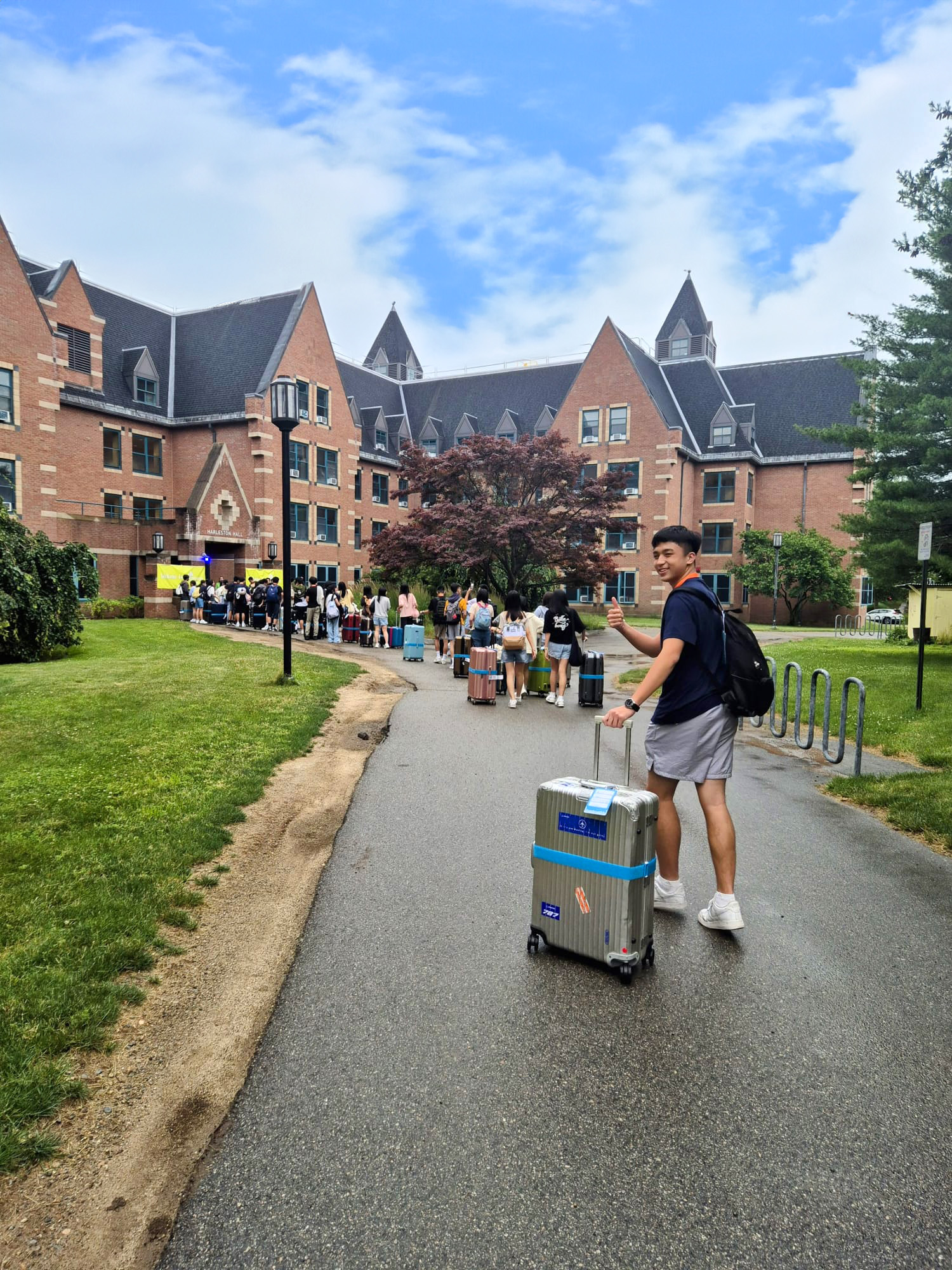
Residential students live in a classic Stanford undergraduate residence hall. The school says each residence has a lounge, a common area, a laundry facility and a computer cluster with a printer, and that a student will most likely have a roommate and may be placed on a co-ed floor — which is why the room is recorded here as a shared twin. Summer residential assistants live in the halls, and dorm cohorts are the unit around which much of the social programme is organised. Stanford states that residential space is limited and asks students to apply early.
Meal Plan
Residential students eat with fellow students in a nearby dining commons, on the meal plan that is counted inside the published residential estimate. Stanford describes a variety of nutritious and sustainable choices and says its dining supports students with food allergies, religious requirements, medical needs and vegan or vegetarian diets. Commuting students live off campus and are not on the residential meal plan.
Activities & Excursions
Beyond the classroom the school runs something most days: dorm-based get-togethers, exploration of the Bay Area, and behind-the-scenes visits to laboratories and research centres across campus. Stanford names its own traditions and celebrations, a headline speaker series, garden and museum tours, and major summer events, and says the programme changes from year to year as the students do. Residential students also get off-campus excursions designed to introduce the local area; the school is explicit that most of those are open to residential students only.
Facilities
Students have access to the university's own estate for the term: more than twenty libraries with print and digital collections and over a thousand licensed databases, and Stanford's athletic facilities — gyms, studios, swimming pools, tennis, handball, squash, basketball and sand volleyball courts, a golf course and several sports fields. The campus setting also gives students hiking, cycling and running on the doorstep. Academic support runs through the Summer Academic Resource Center, which provides advising, tutoring and workshops from before the term begins to the final exams, and students have access to campus health and wellness centres and to maker spaces.
Camp Experience
Stanford frames the summer as a trial run of university life: academic independence, a real university campus to live on, and a student body drawn from more than sixty countries. Students describe the atmosphere as collaborative rather than competitive — everyone earned their place, and the work gets done together. For a high school student the draw is a genuine Stanford transcript and eight weeks of finding out what a university subject actually feels like before having to choose one.
Language Camp prices
Stanford Summer Quarter for High School Students
16–19 yrs2026 price
High school students register for real Stanford courses and study them alongside undergraduate, graduate and gap-year students. All Summer Session courses carry Stanford University credit and appear on an official Stanford transcript. Students who live on campus must take a minimum of eight units, which the school describes as two to three courses; students who commute must take a minimum of five. Admission asks for transcripts, one essay and proof of English proficiency where that applies, and the school states that applicants must be current sophomores, juniors or seniors at the time of application.
The summer quarter condenses Stanford's usual ten-week term into eight, and the school says course loads increase in proportion. Stanford's own measure of workload is the unit: for the average Summer Session student every unit represents approximately three hours of work each week, so a residential minimum of eight units is roughly twenty-four hours of study a week before any extra-curricular programme. Instruction begins on the Monday after arrival and runs to the end of the quarter, with a study-list deadline early in the term and course-withdrawal deadlines published in the school's academic calendar. Academic support runs the whole way through: the Summer Academic Resource Center provides advising, tutoring and workshops from before the term starts to the final exams.
Courses are chosen from the Stanford Summer Session catalogue, which the school groups into eight subject areas: Social Sciences and Humanities, Computer Science and Engineering, Personal Development, Natural Sciences, Innovation and Entrepreneurship, Math and Data Science, Writing and Public Speaking, and Creativity and Design. The school publishes more than 130 courses in total, from foundational core courses to options it describes as unique to Stanford, and invites students to use the summer to go deeper on a favourite topic or explore a subject their school does not teach. Course registration opens in April, after admission is accepted.
Daily Schedule
Breakfast
07:00–08:00
Classes
08:30–12:30
Lunch
12:30–13:30
Dinner
18:30–19:30
Evening activities
20:00–22:00
Lights out
22:30
Included items
Optional Extras
Photos
School

Stanford Summer Session
Stanford Summer Session is Stanford University's fourth academic quarter, an eight-week term on the university's main campus in Stanford, California. In the school's own words, it "provides high-achieving and ambitious students a transformative educational experience at a world-class university", combining challenging academics with a rich array of extra-curricular programming. Summer Session is open to high school, undergraduate, graduate and gap-year students; all its courses carry Stanford University credit and an official Stanford transcript. The school publishes a catalogue of more than 130 courses and describes a student body drawn from more than 60 countries. Residential students live in classic undergraduate residence halls and eat in a nearby dining commons; every student has access to more than twenty libraries, to Stanford's gyms, pools, courts, golf course and sports fields, and to the Summer Academic Resource Center for advising, tutoring and workshops.