Upcoming dates not published yetArt CampsScience / STEM Camps

Emory Pre-College Program: a summer on a US university campus

Atlanta, United StatesEmory University Pre-College Program4.4(463)

Latest published dates
Jun 14 – 27, 2026
Duration
2 weeks
Ages
15–18
2026 price

$1,963

Per week on a 2-week stay

Sold in packages from 2 weeks — $3,925

We'll let you know when this camp adds new dates.

The Emory Pre-College Program is a two-week noncredit summer programme on the Atlanta campus of Emory University, for high school students in their tenth or eleventh year. Each student takes one college-level course taught by Emory faculty, joins college-preparation workshops, and may live in a university residence hall.

Language

English

Program type

Art Camps, Science / STEM Camps

Accommodation

Campus

About

About the Course

Every student takes one noncredit course, chosen from the Pre-College catalogue and taught on campus by Emory instructors. Subject areas run from pre-med, public health and the sciences through AI and computer science, law and politics, writing, the arts and theatre, to psychology and the social sciences. Class meets each weekday morning; laboratory work and co-curricular trips take place in the same block. There is homework, and it can take several hours a day. At the end of the session each student receives a written assessment from the instructor and a Certificate of Completion. Attendance in class and in programme activities is required.

What’s Included

The programme fee covers tuition for the course, the Emory Exploration enrichment sessions, and the excursions and evening activities, including admission tickets, transport and the meal on excursion days. A place in a university residence hall with full board is an option on top of the base fee. Textbooks and materials are bought separately for some courses, and a small number of courses carry a laboratory fee. The application fee is separate and non-refundable; the enrolment deposit is payable on acceptance and counts towards the total.

Accommodation

Students who take the residential option live in Turman Hall or Hamilton Holmes Hall, air-conditioned residence halls on the Atlanta campus. Rooms are shared, and both the hall and the roommate are assigned by Residence Life staff before arrival. Entry to the building is by access card only. Resident Advisors, who are current Emory undergraduates, live in the halls and provide supervision and academic support. There is a communal refrigerator and a laundry room, free of charge. Curfew is eleven at night on weekdays and midnight at weekends. Commuting students live at home in metro Atlanta and travel to campus each day; they may visit the residence halls until curfew.

Meal Plan

Residential students eat in the Emory dining halls, and all meals are covered by the residential fee. Commuting students buy their own meals on campus, where several dining options are open, including the DCT dining hall. On excursion days a meal is included for everyone, residential and commuting alike.

Activities & Excursions

Afternoons open with Emory Exploration: College 101 workshops and degree explorations, run with Emory students, faculty and staff from the College of Arts and Sciences, the Nell Hodgson Woodruff School of Nursing and the Rollins School of Public Health. After that the day is free for study or for Eagle Excursions into Atlanta, which have taken groups to the World of Coca-Cola, the Georgia Aquarium and to Atlanta Braves and Atlanta United games. Evenings bring activities planned by Residence Life Mentors, from film screenings to group outings. Saturday is a full day out in Atlanta; Sunday is quieter, with optional activities. Commuting students are encouraged to join all of it.

Facilities

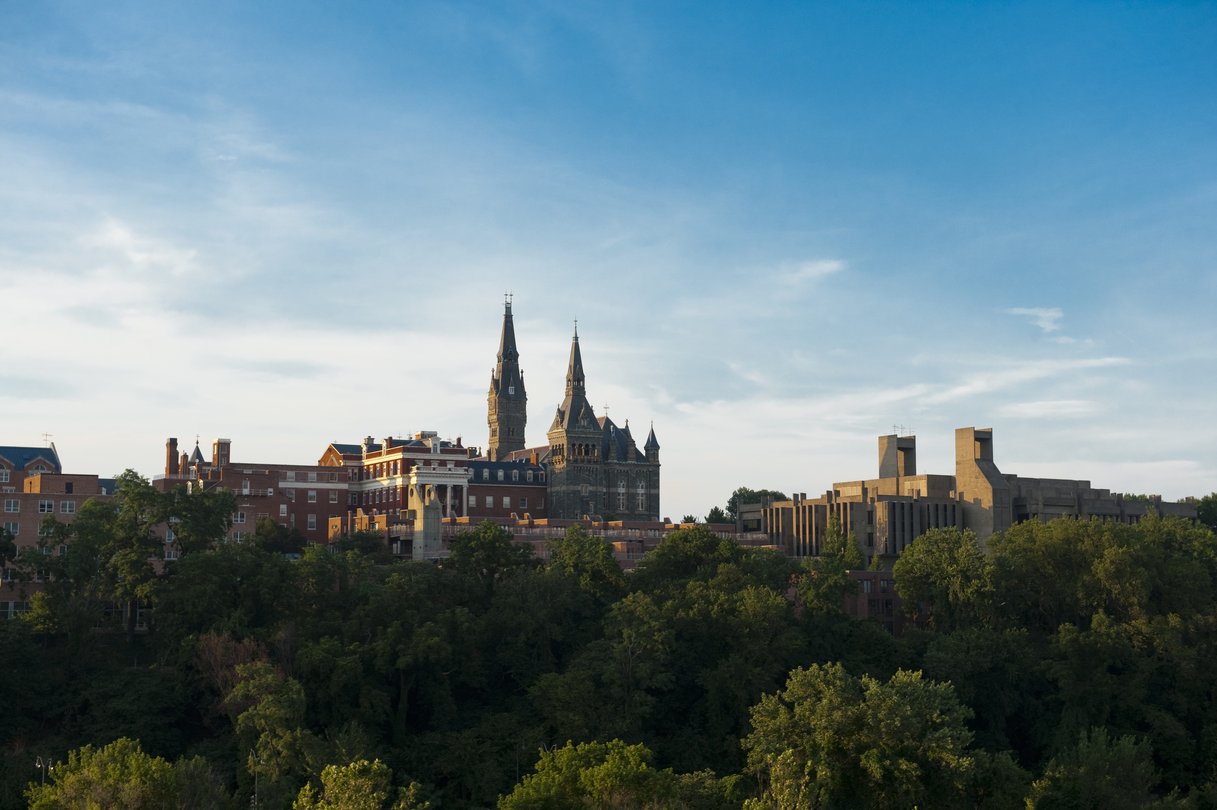
The programme uses the Emory campus in Druid Hills: classrooms, libraries, dining halls and the recreational facilities. Classes are small, averaging fourteen students. Around four hundred students pass through the programme across the sessions, roughly a hundred to a hundred and fifty in each, and about nine in ten of them live in the residence halls.

Camp Experience

This is a first taste of living and studying at a research university rather than a summer camp with lessons attached. Students in their tenth or eleventh year of high school take a college-level course alongside peers from across the United States and abroad, eat in the dining halls, and spend evenings and weekends in a supervised university community. Emory is clear that taking part does not guarantee later admission to the university, but the experience of a real course, a written assessment and a certificate is something a student carries into the college application.

Language Camp prices

Pre-College Program (noncredit)

5 Lessons · 15–18 yrs · B2–C2

2026 price

One college-level noncredit course chosen from the Emory Pre-College catalogue, taught on campus by Emory instructors, with a written assessment and a Certificate of Completion at the end of the session.

One class meeting each weekday, 9:00 to 11:30, plus afternoon enrichment sessions.

Subject areas published for the catalogue are pre-med, human and public health, sciences, business and communication, AI, computer science and statistics, law, politics, philosophy and history, the arts and theatre, writing, humanities and social science, and psychology. Class meets each weekday morning; co-curricular trips and laboratory work happen in the same block.

Daily Schedule

  1. Breakfast

    07:00–08:00

  2. Classes

    08:30–12:30

  3. Lunch

    12:30–13:30

  4. Dinner

    18:30–19:30

  5. Evening activities

    20:00–22:00

  6. Lights out

    22:30

Included items

  • 24/7 supervision
  • International students
  • Small groups
  • Excursions
  • Movie Night
  • Cafeteria
  • Laundry room
  • Residence accommodation
  • Smart classroom

Optional Extras

Mandatory fees1

Reviews

4.4out of 5

Reviews

Based on 463 Google reviews

Photos

School

Emory University Pre-College Program logo

Emory University Pre-College Program

Emory University runs a summer academic pre-college programme for current high school sophomores and juniors on its Atlanta campus in Georgia. The portfolio includes noncredit sessions, a Pre-Med Institute and a credit-bearing Summer College option, with residential and commuter formats.

Location

Map showing camp locationEmory University, 201 Dowman Drive, Atlanta, GA 30322, United States, Atlanta

Frequently Asked Questions

Students must be at least fifteen years old by the start of their session and currently in the tenth or eleventh year of high school when they apply, with a grade average of three point zero or better. Students in the ninth or twelfth year, and students who have already graduated, are not eligible. International applicants are welcome and must show English proficiency by test score.

No. The Pre-College Program is noncredit: students receive a written assessment from the instructor and a Certificate of Completion. The separate Summer College Program is the credit-bearing option.

No, but most students do - around nine in ten. Families already living in metro Atlanta may choose the commuting option instead, in which case the residential fee does not apply. Commuting students take part in all activities and excursions and may stay on campus until curfew.

Residential students are strongly discouraged from driving to campus. They may leave campus only in supervised groups using Emory-provided transportation and may not ride with another student driver.

Resident Advisors, who are current Emory undergraduates, live in the residence halls and provide supervision and academic support. Entry to the halls is by access card only, and Emory Police are on campus. Curfew is eleven at night on weekdays and midnight at weekends. Residential students may only leave campus in supervised groups with transport provided by the programme.

The FAQ states that Emory removed COVID-19 vaccine requirements for minors and non-Emory participants staying in overnight campus housing. The university may adapt its response if conditions change.

Most courses set work outside class. The amount varies by course and can take up to several hours a day. Attendance and participation are required, and missing several class meetings makes a satisfactory grade impossible.

Textbooks and course materials, where a course requires them, and a laboratory fee on a small number of courses. Commuting students buy their own meals on campus. The application fee is separate and non-refundable, and the enrolment deposit is payable on acceptance and counts towards the total cost.

Fourteen students on average. Each session takes roughly a hundred to a hundred and fifty students in total, across the whole programme about four hundred.

No. Participation does not guarantee undergraduate admission to Emory, though successful completion may strengthen a student’s broader college application portfolio.

Yes. A recommendation should come from someone other than a parent and address the student’s character, academics, and ability to participate in a community setting.

No. International applicants who have not completed an accepted English-language test are not eligible to apply; the program criteria explain the required documentation.

Applicants must choose an alternate course. If the first choice is unavailable at enrollment, the student may be placed in the alternate course and notified.

Transcripts are required for all applicants. Test scores are required for Summer College applications.

Yes. Students may participate in multiple sessions, either on campus or online.

No. Attendance and participation are required for classes and program activities, and students must be available to take part for the full course.

Changes to a credit-course schedule require permission and approval from the Summer Programs Director.

Accepted students should complete the accommodations questionnaire in the application portal to describe their needs or restrictions. Prospective students may contact the program before applying to discuss needs.
More about this camp

The Emory Pre-College Program is run by Emory University in Atlanta, Georgia, for high school students who have finished their tenth or eleventh year. It is a noncredit programme: students take one college-level course, chosen from a catalogue of more than a hundred taught by Emory faculty, and receive a written assessment and a Certificate of Completion rather than university credit. The teaching day starts after breakfast and runs through the morning, with laboratory work and course trips in the same block. Afternoons are given to Emory Exploration, a series of College 101 workshops and degree explorations run with Emory students, faculty and staff from the College of Arts and Sciences, the School of Nursing and the Rollins School of Public Health. What is left of the afternoon and the evening is free for study or for Eagle Excursions into the city. Most students live on campus. The residence halls used by the programme, Turman Hall and Hamilton Holmes Hall, are air-conditioned, entered by access card, and staffed by Resident Advisors who are current Emory undergraduates. Rooms and roommates are assigned before arrival. Commuting is possible for families already living in metro Atlanta. The programme admits students who are at least fifteen at the start of their session and currently in the tenth or eleventh year of high school, with a grade average of three point zero or better. International students are admitted and must show English proficiency by test score. Emory states plainly that taking part does not guarantee admission to the university later.